 Pin
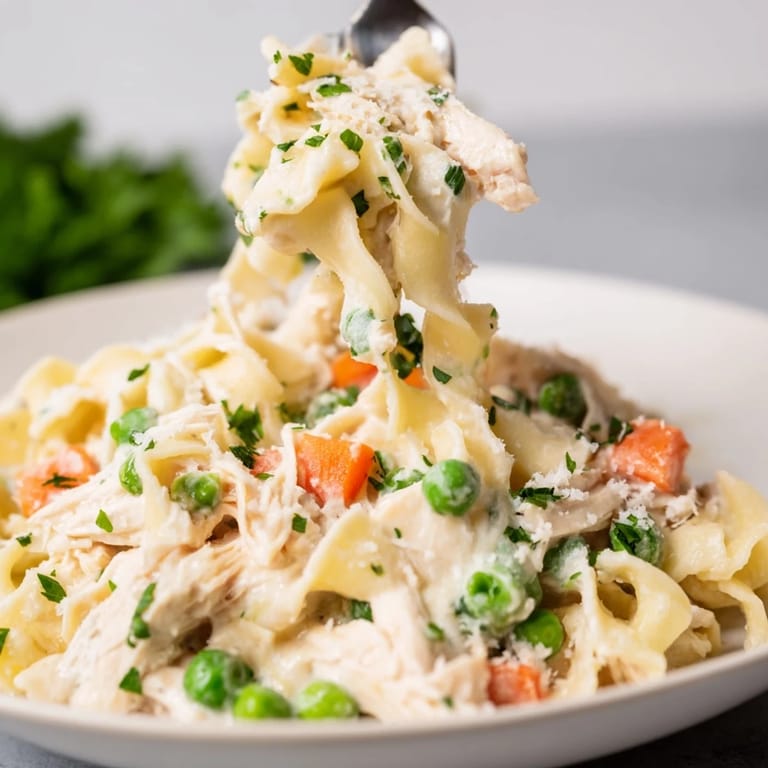
Pin My neighbor once handed me a bag of fresh peas from her garden, still cool from the morning, and I found myself staring into the fridge wondering what to do with them. I had leftover chicken, a box of egg noodles, and a craving for something that tasted like comfort without the heaviness. That skillet dinner turned into something my kids now request by name, and it happens to be exactly what spring evenings call for.
I made this on a Tuesday night when everyone was cranky and hungry, and the kitchen filled with the smell of garlic and butter hitting the pan. My youngest wandered in, drawn by the scent, and stayed to watch the sauce thicken. By the time I folded in the noodles, she was already setting the table without being asked, which is how I knew it was going to be good.
Ingredients
- Cooked, shredded chicken: Rotisserie chicken is your best friend here, but any leftover roasted or poached chicken works just as well and saves you from starting from scratch.
- Wide egg noodles: They soak up the sauce perfectly and give the dish that comforting, homey texture that reminds you why pasta exists.
- Frozen peas: Do not overthink this, frozen peas are sweet, bright, and require zero prep, which is exactly what a weeknight dinner needs.
- Diced carrots: They add a little natural sweetness and a pop of color, plus they soften just enough in the skillet to feel tender without turning mushy.
- Yellow onion: Finely chopped so it melts into the sauce and adds a gentle, savory backbone without overpowering the lighter spring flavors.
- Garlic: Just two cloves, minced and cooked until fragrant, which takes about thirty seconds but makes the whole dish smell like someones been cooking all day.
- Unsalted butter: The base of the sauce, and using unsalted lets you control the seasoning so it does not get too salty once the Parmesan goes in.
- All purpose flour: This thickens the sauce into something silky and coating, not gluey, as long as you stir it constantly for that first minute.
- Low sodium chicken broth: It keeps the sauce flavorful without making it taste like a salt lick, and you can always add more seasoning at the end if needed.
- Whole milk or half and half: This is what makes the sauce creamy and just rich enough, but not so heavy that you feel like you need a nap afterward.
- Grated Parmesan cheese: Stir it in at the end for a nutty, savory finish that clings to every noodle and makes the sauce taste more expensive than it is.
- Dried thyme: A little goes a long way, and it brings an earthy, springtime note that feels right with peas and carrots.
- Black pepper and salt: Season to taste, and remember the Parmesan and broth already bring some saltiness, so go easy at first.
- Fresh parsley: Optional but worth it, because a sprinkle of green at the end makes the whole skillet look alive and taste a little brighter.
Tired of Takeout? 🥡
Get 10 meals you can make faster than delivery arrives. Seriously.
One email. No spam. Unsubscribe anytime.
Instructions
- Boil the noodles:
- Cook the egg noodles in salted water until they are just al dente, then drain and set them aside so they do not overcook. You will fold them into the sauce later, so they will finish cooking in the skillet.
- Saute the vegetables:
- Melt the butter in a large skillet over medium heat, then add the onion and carrots and cook for four to five minutes, stirring occasionally, until they soften and the onion turns translucent. Toss in the garlic and cook for just thirty seconds until it smells amazing but does not brown.
- Make the roux:
- Sprinkle the flour over the vegetables and stir constantly for about a minute so it coats everything and loses that raw flour taste. This step is what keeps your sauce smooth and not lumpy, so do not skip the stirring.
- Build the sauce:
- Slowly whisk in the chicken broth and milk, then add the thyme, salt, and pepper and bring the mixture to a gentle simmer. Let it cook for three to four minutes, stirring often, until the sauce thickens enough to coat the back of a spoon.
- Add the chicken and peas:
- Stir in the frozen peas, shredded chicken, and Parmesan cheese, and let everything heat through for about two minutes. The peas will thaw quickly and the cheese will melt into the sauce, making it creamy and glossy.
- Toss in the noodles:
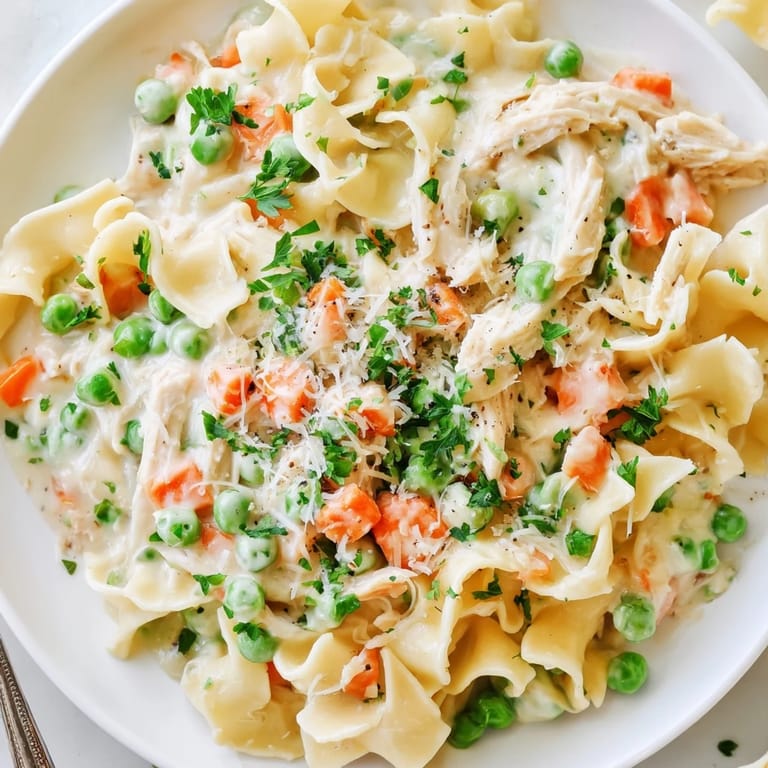
- Gently fold the cooked noodles into the skillet until every strand is coated in sauce, then let it cook for another minute or two if you want it a little thicker. Remove from heat, sprinkle with parsley if you have it, and serve warm.
 Pin
Pin The first time I served this, my husband looked up from his bowl and said it tasted like the kind of meal his mom used to make on busy nights, which is the highest compliment he knows how to give. I realized then that some recipes do not need to be fancy to feel special, they just need to be warm and made with a little bit of care.
What to Do With Leftovers
This reheats surprisingly well, though the noodles will soak up more sauce as they sit, so you might want to stir in a splash of milk or broth when you warm it up. I have eaten it cold straight from the fridge standing at the counter, and it was still good, which says something. It keeps in an airtight container for up to three days, and honestly, the flavors get even cozier overnight.
How to Make It Your Own
If you have asparagus or baby spinach lying around, toss them in with the peas for extra spring vibes. A squeeze of lemon juice at the end brightens everything up and cuts through the creaminess in a way that feels fancy but takes two seconds. You can also swap the chicken for turkey, or skip the meat entirely and add white beans for a vegetarian version that still feels hearty.
Serving Suggestions
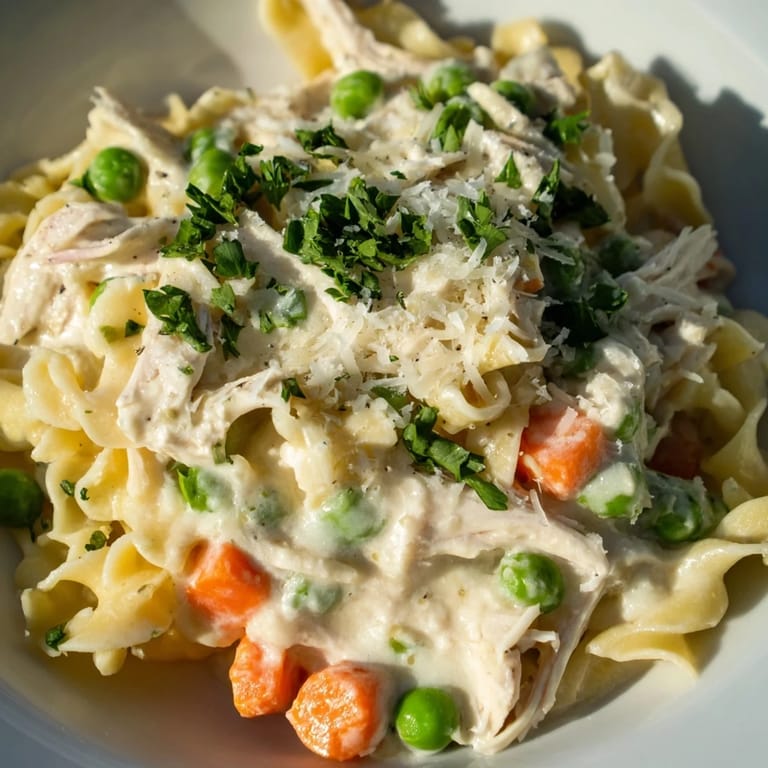
This is a one skillet meal, so it does not need much, but a simple green salad with a lemony vinaigrette and some crusty bread for soaking up the sauce would round it out nicely. I have also served it with roasted broccoli on the side when I am feeling virtuous, and it balances the creamy noodles perfectly.
- Pair it with a crisp white wine if you are having company, or just sparkling water with lemon if it is a regular Tuesday.
- Serve it straight from the skillet at the table for a casual, family style vibe that saves you from washing another serving dish.
- Leftovers are great packed in a thermos for lunch the next day, and they stay warm and comforting until midday.
 Pin
Pin This is the kind of recipe that fits into your regular rotation without any fuss, and it feels like spring even if the weather outside has not quite caught up yet. Make it once, and I promise it will show up on your table again.
Recipe Q&A
- → Can I use fresh vegetables instead of frozen peas?
Yes, fresh peas work wonderfully. Add them during the final 2-3 minutes of cooking to maintain their bright flavor and tender texture. Snap peas or sugar snap peas are also excellent springtime substitutions.
- → What type of chicken works best for this dish?
Rotisserie chicken is the most convenient option and adds rich flavor without extra cooking time. Alternatively, poached or grilled chicken breast works well. Ensure the chicken is shredded into bite-sized pieces for even distribution throughout the skillet.
- → How do I prevent the sauce from becoming too thick?
The flour and butter roux creates the base for thickening. Add the liquid gradually while whisking to avoid lumps. If the sauce becomes too thick during cooking, whisk in additional broth or milk in small increments until reaching your desired consistency.
- → Can I prepare this dish ahead and reheat it?
Yes, this skillet dish reheats well. Store in an airtight container for up to 3 days in the refrigerator. Reheat gently on the stovetop over medium-low heat with a splash of milk to restore the sauce's creamy texture.
- → What vegetables pair well as substitutions?
Asparagus, baby spinach, diced zucchini, and green beans are excellent spring alternatives. Add heartier vegetables like asparagus during the initial sauté, while tender greens like spinach should be stirred in at the end just before serving.
- → Is this dish suitable for freezing?
While technically freezable, the noodles may absorb excess liquid and become mushy upon thawing. For best results, store the sauce and chicken separately from the noodles, combining them fresh when ready to serve.